The aim of the project is precisely to investigate whether and in what way the learning circle model contributes to creating a robust learning environment in the workplace when the perspectives of employees and managers are taken into account. The trial is underway in five Nordic municipalities.
Pilot testing in five municipalities
The Nordic Network for Lifelong Learning (NLL) is currently pilot testing the learning circle method as a tool for interdisciplinary co-learning, co-creation and innovation in the workplace within the health and social care sector. The precise aim of the project is to investigate whether, and in what way, the learning circle model contributes to creating a robust learning environment in the workplace when the perspectives of both employees and managers are taken into account. The pilot testing is underway in five Nordic municipalities.
An arena for knowledge development
Both large and small municipalities are now part of NLL’s new working life network. The network includes representatives from working life and employees selected from various health and social care institutions across Denmark, Sweden, Åland and Norway. The network is following the pilot project, in which representatives from the municipalities are being trained in how to facilitate a local learning circle.
The working life network is an arena for knowledge, and skill and competence development, as well as for exchanging experiences between practitioners from the municipal enterprises and working life organisations. Other members are relevant professional communities from the health and care services, as well as two “trainers” responsible for providing training in the learning circle model.
Challenges on both sides: employee and employer
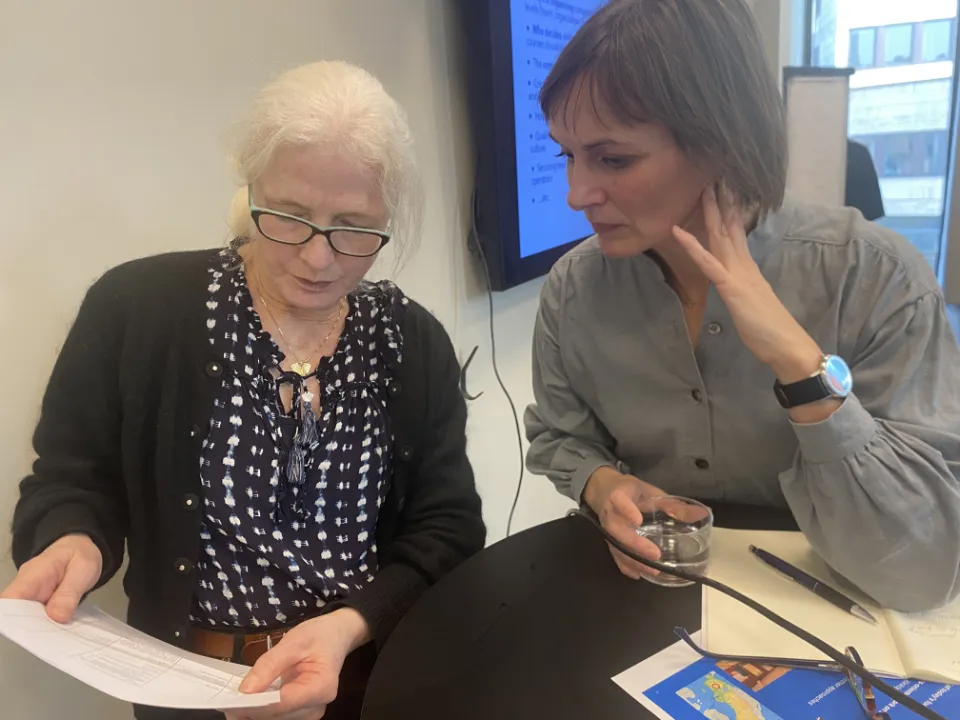
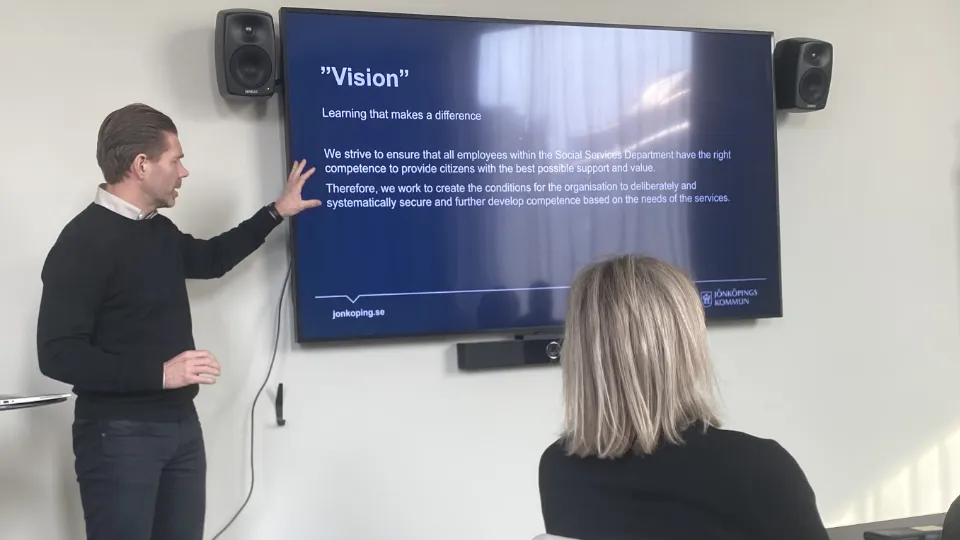
During a network meeting in Jönköping in March, the learning circle as a method was discussed in light of various challenges facing the health and care services. This was the network’s second location-based meeting. At the first meeting, the focus was on initiating the learning circles. At the meeting in Jönköping, the focus was on connecting the learning circle project to the challenges that both employer and employee organisations face when it comes to ensuring high-quality services, despite a lack-of-resources situation.
NLL coordinators Anne Solsvik, Norway, and Marie Aakjær, Denmark, are responsible for the network and the pilot testing of the learning circles. Lectures and group discussions at the meeting helped participants present many different challenges, along with reflections on the use of learning circles. Some key points from working life representatives include:
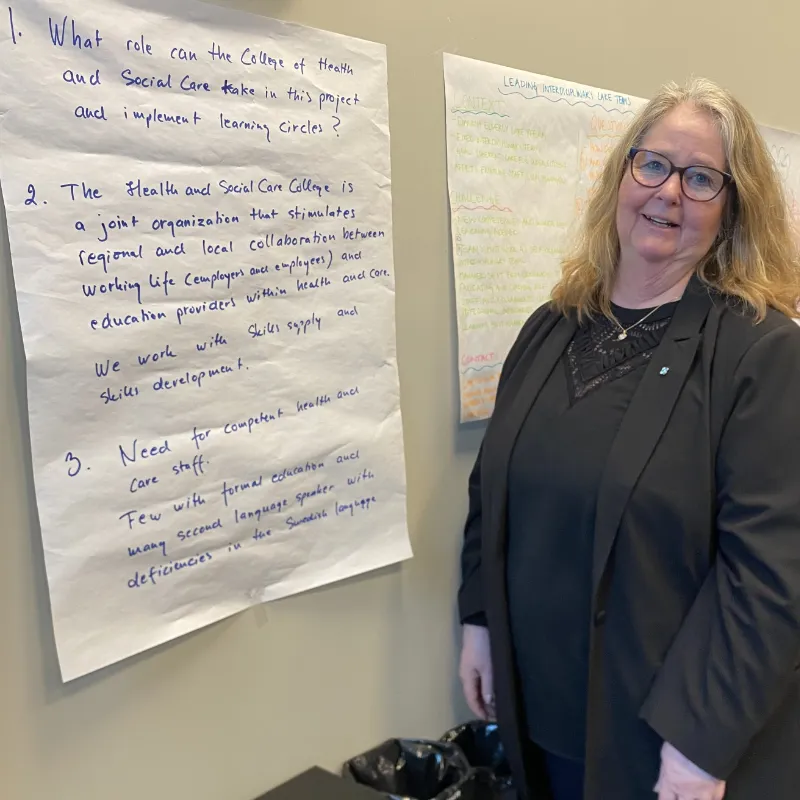
Sweden: We need to take new initiatives
“Our purpose is to ensure competence within the care sector. Through work with education and skill and competence development, our association aims to contribute to ensuring that many people with the right competencies are willing to work in the care sector. We need more educated and qualified individuals, including nursing assistants (health care assistants/social and health care assistants) and supervisors,” says Zenita Cider from the association Vård- och omsorgscollege, which represents both employer and employee associations.
“We need to take new initiatives to improve competence. It’s important to create an environment in which we learn from each other. The use of learning circles is a good initiative. We would like to explore this and see what role we can play in spreading the concept across regional and local VO-Colleges,” continues Cider.
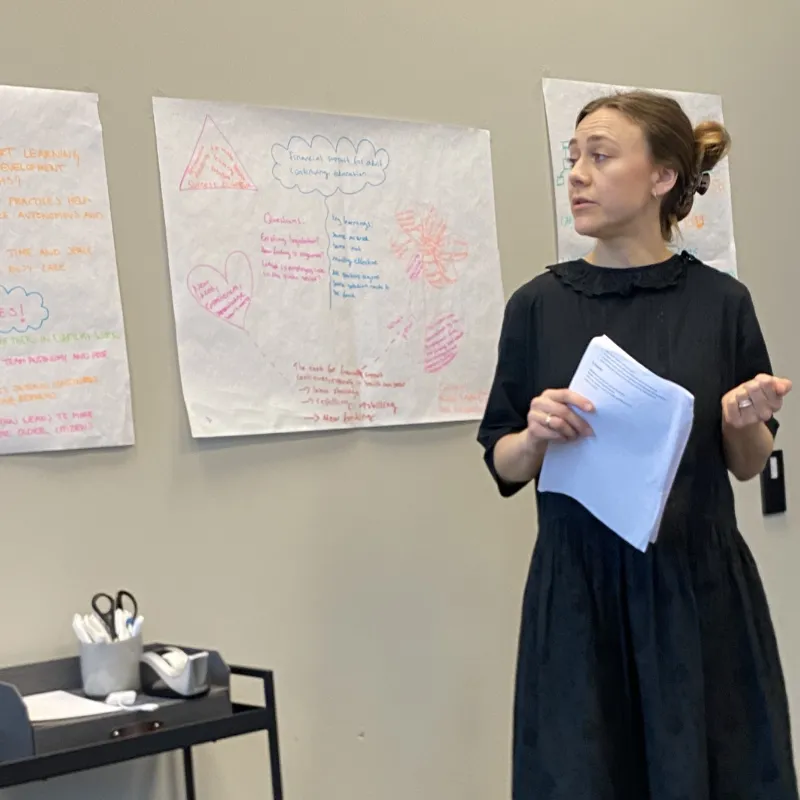
Denmark: A challenging “reform storm” requires time for reflection and learning
New continual reforms are creating a challenging situation for the health and care sector in Denmark. One Danish participant let out a sigh: “Perhaps it’s just that we Danes want to do too much at once?”
“New reforms require new competencies and more training. Learning in the workplace is necessary. We have to work together, not in our own silos,” says Christina Bendix from Local Government Denmark (Kommunernes Landsforening).
“When changes occur, we have to take time for reflection and learning in our daily work, and we have to allocate resources to this now. Learning together in teams is a success factor. We can take elements from the learning circle method and use them in the teams,” she says.
Norway: Municipalities are “drowning” in state-mandated duties and responsibilities
“We are short on staff in the health and social care sector. We get figures and statistics showing this, but figures alone don’t solve much,” says Hanne Børrestuen, an advisor at KS (the employer organisation for municipalities and county authorities in Norway).
“A major challenge for Norwegian municipalities is that the state imposes so many duties and responsibilities on them that they have little room for manoeuvre. The sum of demands becomes too great. KS is working to make municipalities more independent and make more decisions for themselves,” she continues.
“What do you think of this Nordic initiative regarding learning circles in the workplace?”
“Meeting Nordic colleagues and sharing experiences is always valuable. We face many of the same challenges and can work together to find solutions,” points out Børrestuen.
“As a representative of KS, what opportunities do you see in using learning circles within the health and social care sector in municipalities?”
“In a time characterised by shortages of money, time and people, we have to use more learning arenas. Therefore, the workplace itself needs to become the most important arena for competence and quality development. This allows more people to participate, and skill and competency development feeds directly into carrying out duties and responsibilities at each specific workplace. Learning circles can be a suitable method for this work, alongside other tools for learning and sharing in the workplace,” says Hanne Børrestuen.
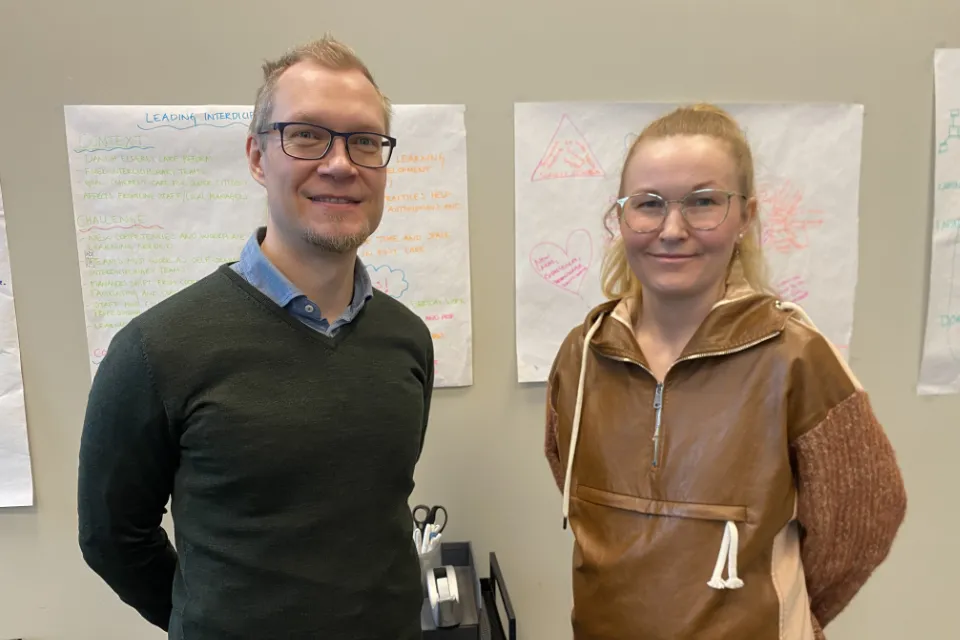
Finland: Lost important funding for adult education
“Losing a funding opportunity for adult education is a dilemma for us. We had a fund for adult education financed by both employees and employers. The authorities changed the legislation, which resulted in the funding being stopped. But the need for it remains the same as before, and there is a particularly great demand for education and training in professions with mandatory qualifications. Now we’re looking for new possibilities,” say Matti Tujula from the Trade Union for the Public & Welfare Sectors and Assi Puistolahti from the Association of Finnish Municipalities.
“What do you think of this Nordic collaboration on sharing experiences and piloting the learning circle method?”
“It’s useful. We share many of the same challenges to a large extent in the Nordic countries, but at the same time, there are also differences, so we can learn something from each other,” says Matti Tujula.
He has faith in learning circles as a method for workplace learning. The method builds on Nordic values, which means employees will likely appreciate such a way of learning and working together.
“Could this be a way of working in your organisation too?”
“Possibly, but I have most faith in the method for workplaces in the health and social care sector.”
Iceland: The challenge of collaboration between employees, managers and employers
“We tend to think in silos. Getting different professional groups to work together – not just from the top down, but also from the bottom up – is a clear challenge,” say two representatives from Iceland, Fríða Rós Valdimarsdóttir from BSRB and Hanna María Karlsdóttir from City of Reykjavík.
“We need to get employees on board so they trust in the process and feel they belong in the collaboration in the workplace. Here we view the learning circles as a tool for establishing a professional collaboration platform where all professional groups can learn from each other, as everyone brings important knowledge with them,” say Fríða Rós and Hanna María.
“A few years ago, working hours for public sector employees were reduced from 40 hours per week to 36 for day workers and 32 for shift workers. When challenges arise, there is a tendency to blame the shortened workweek. But that leads nowhere.”
When everyday life is too busy to develop collaboration
“Do we need to face facts and admit that certain workplaces are so busy they can’t free up time for employees to participate in a learning circle?” Cathrine Merete Lenstrup has found it is difficult, if not impossible, to gather managers and employees for collaboration meetings at an operational level in the hospital world where you work around the clock.
“As a clinical nursing specialist, I previously established an interdisciplinary panel to discuss unintended incidents. There was broad support from management, and the employees involved expressed interest in participating,” says Lenstrup.
But despite thorough planning, it wasn’t possible to assemble the group. There were changes in shift schedules, busyness, illness and lack of attendance. After three attempts, Lenstrup had to admit that getting such a panel started was proving too great a challenge. With this experience fresh in mind, Lenstrup poses the following question:
“How do you ensure genuine organisational support in a daily operation that is staffed around the clock, all year round?”
She would like suggestions for how learning circles can be anchored in daily operations when they are no longer part of a research project.
Accompanying research
The pilot testing of learning circles in Nordic municipalities is being followed by researchers over a two-year period. Researchers Dorothy Olsen from the Nordic Institute for Studies in Innovation, Research and Education (NIFU) and Ulrik Brandi from DPU, Aarhus University, will carry out data collection and analysis of the results from the work with learning circles throughout the entire two-year project period.
“The foundation of workplace learning is that changes happen continuously, and employees have to adapt to new work duties and responsibilities and challenges. The challenges and conditions in working life vary, and therefore the learning approach needs to vary too,” says Ulrik Brandi.
A toolbox with multiple learning methods
“We need more than one learning method,” he says.
He points out that collaborative learning was put on the map after the turn of the millennium. Critical thinking, reflection, practice-based approaches and participant-driven methods have been key factors. As a method, the learning circle incorporates these same elements. Now, Brandi and Olsen will follow the pilot testing of learning circles as a tool in Åland, Copenhagen, Jönköping, Porsgrunn and Notodden.
Said during the meeting in Jönköping about pilot testing learning circles in the municipalities:
“It’s about learning together.“
Hans Mikkelsen, teacher for the facilitators
“We learn through practice – it’s our everyday learning.“
Martin Sinclair, Head of Competence Development, Jönköping Municipality
“Competence development happens in the workplace when managers and leaders encourage it.”
Trade union survey
“How can we anchor the learning circle in daily work?”
Cathrine Merete Lenstrup, Clinical Nurse Specialist, Bispebjerg Hospital
“Specialisation in working life is increasing, and this leads to more fragmentation. Therefore, we need interdisciplinary collaboration.”
Marlene Ockander, Associate Professor, Jönköping University, School of Health and Welfare
“The most important thing is learning to learn. The learning circle is one possible way to learn and to be curious.”
Maria Marquard, teacher for the facilitators
“What ‘burning issues’ in competence development do you see at national, regional or local levels?”
This was one of the challenges from NLL coordinators Anne Solsvik and Marie Aakjær, during the meetings in Jönköping