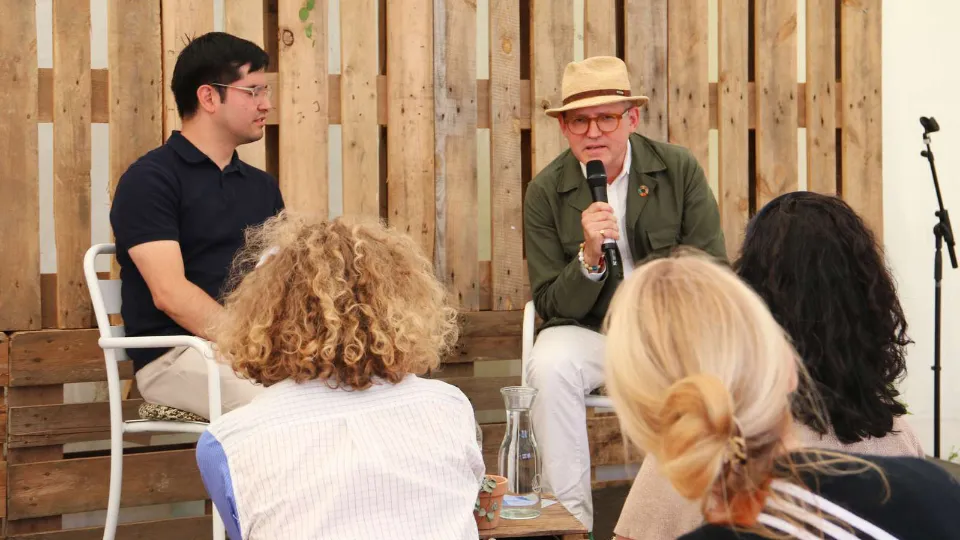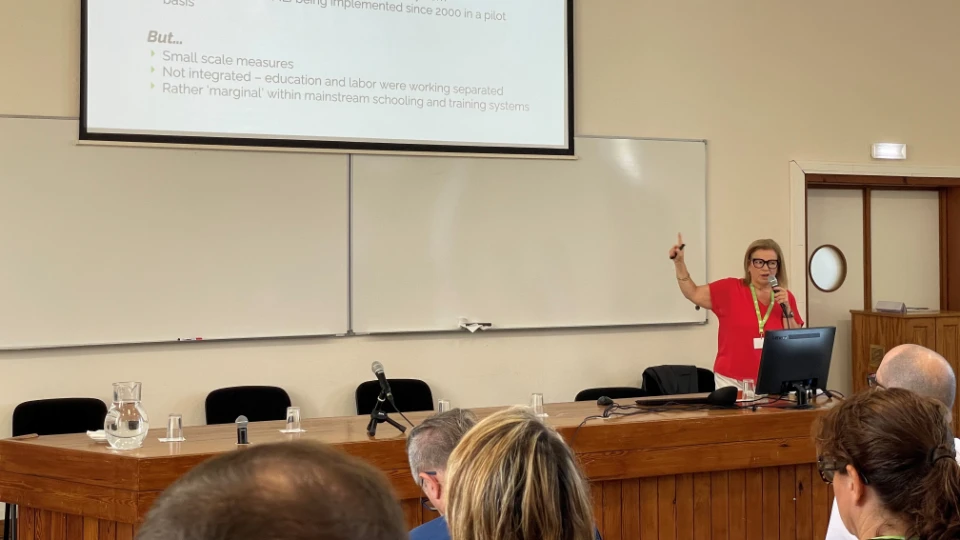

-Basic skills are the bases for opportunities. Due to fast digitalisation and green transition – the Union of Skills strategic framework was launched in March 2025. Education providers, employers and industries need to work together. Action Plan for Basic Skills – a key pilar of the Union of Skills strategy – focuses on upskilling and reskilling but also on resilience and democracy. Adults engage in learning for several reasons – basic skills have many functions – not only for employment, points out Klara Perenyi, a policy officer in the Union of Skills Unit at the European Commission’s Directorate-General for Employment, Social Affairs and Inclusion (DG EMPL), addressing the conference participants.
Basic skills challenge across Europe
Nordic countries have good and robust lifelong learning systems and the participation in learning is hight according to PIAAC. Still, we can talk about the “paradox of average high scores” in the Nordic region, when the gap between the high skilled and the low skilled is quite big, and a significant number of adults in the region still lack adequate basic skills. We have well developed, well financed and robust systems for lifelong learning. The speed of transformation and growing inequality, however, present a challenge to Nordic lifelong learning systems. More about the new demands and basic skills challenges in the article.
There is a great potential of learning and mutual inspiration in Europe when it comes to raising the levels of basic skills of our citizens. Portugal hosts the conference this year. The speakers are eager to share and learn, and emotional about the learning journeys of adult population in their countries.
Portugal’s basic skills journey: from historical barriers to lifelong learning reform
Portugal has a negative historical heritage concerning education. The country has done all reforms possible but still finds itself at the bottom of the PIAAC list in 2023. Portugal lived under dictatorship until 1974. The slogan of the rulers was “.. give you bread but not education”. Education was not a priority for 50 years under the dictatorship.
In 1996 Portugal already did qualitative studies on adult literacy, and quantitative studies among adults. 47% of population in Portugal were below level 1: level 0 – 10,3 %, level 1 – 37%. Respondents could not read a simple add – a few lines of text and call the given telephone number. That means every second Portuguese was Level 1 (PIAAC level) and below.
Portugal has done a huge reform in recognition of prior learning (RPL) and introduced diversified study tracks to reach adults with low levels of schooling. RPL started in 2000 and has since been a top priority in Portugal. Qualifica Programme started in 2017 and now 1,2 million adults in Portugal are certified through Qualifica Programme. But still – the authorities talking at the EBSN conference 2026 say: “Portugal needs to think new ways. Adult education needs to be part of mainstream education. Companies and the private sector need to become part of the lifelong learning ecosystem.”
A lot of adults despite low formal education are motivated to learn, but still do not participate. Several speakers at the EBSN conference raise the question of non-participation and call for more support measures instead of talking “non-motivation”. The upcoming PIAAC conference in Jyväskylä in August 2026 is a good opportunity to continue exchange on basic skills as a crucial enabler and opportunity for participation, personal and professional development as well as competitiveness. The Conference is the core activity of the Nordic-Baltic PIAAC Network this year.